Trade operations for Romania
Trade operations, fiscal workflows, and stock control in one system
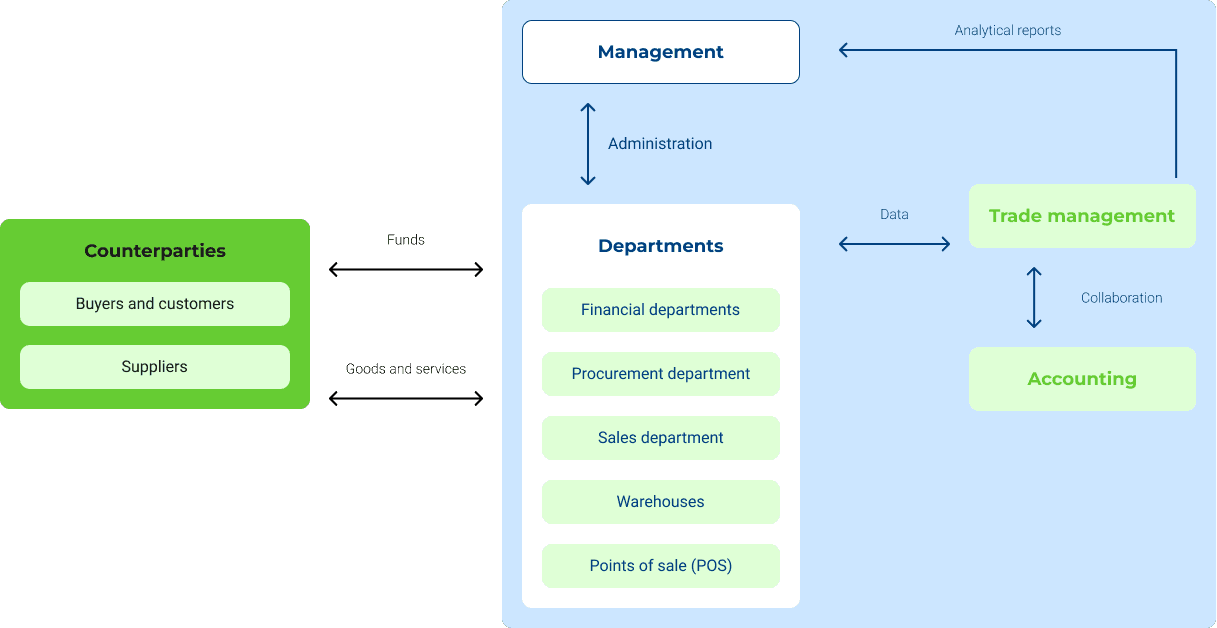
Trade Management connects retail, distribution, e-commerce, warehouse, POS, fiscal documents, and accounting exchanges in one operating layer for Romanian commercial teams.
- Sales, procurement, warehouse, POS, returns, and trade reporting in one shared workflow
- Romanian fiscal operations: e-Factura, e-Transport, ANAF exchanges, VAT, Intrastat, and protected numbering
- PayDesk, OneConta, banks, marketplaces, delivery services, and API-based data exchange
- Phased rollout for stores, warehouses, online channels, and finance teams
store, distribution, and mixed commercial workflows
e-Factura, e-Transport, VAT, Intrastat, and fiscal controls
receipts, warehouse flows, barcode scanning, and returns
banks, marketplaces, delivery platforms, and accounting exchange
Who it is for
Built for commercial teams, not generic software traffic
Trade software is bought by operations, finance, warehouse, and commerce stakeholders together. The page should show where Trade Management reduces friction for each group first.
Retail, POS, and store operations
For teams that need one operational flow for B2C and B2B sales, price changes, receipts, returns, and day-to-day store control.
- customer orders, fiscal receipts, and sales documents
- price changes, discounts, commission, and consignment flows
- shared visibility between stores, warehouse, and finance
Warehouse and distribution teams
For teams that need tighter control over goods issue, stock movement, reconciliation, and warehouse execution.
- goods issue, receipt notes, and partial shipments
- mobile barcode scanning and warehouse workplace flows
- better stock visibility across commercial operations
Accounting and finance
For teams that need Romanian fiscal documents, VAT logic, acquiring, treasury, and accounting-ready trade data.
- VAT handling, fiscal numbering, and local document standards
- bank, acquiring, advances, and payment allocation workflows
- reconciliation with accounting systems and OneConta
E-commerce and integration owners
For teams responsible for delivery channels, online orders, marketplaces, and connected exchanges with external systems.
- Wolt, Glovo, Bolt, and online order synchronization
- HTTP, webhook, and API-driven operational exchanges
- connected data for POS, trade documents, and reporting
Why now
The page should answer why trade teams change systems now
The strongest Trade Management story is not a module list. It is the business pressure around fragmented channels, Romanian fiscal workflows, and operational data that no longer matches across teams.
Fragmented store, warehouse, and online channels
Commercial teams still lose time when sales, POS, stock, and online orders live in separate tools with slow reconciliation between them.
Romanian fiscal pressure inside daily work
e-Factura, ANAF exchanges, VAT handling, and local documents need to happen inside the same trade workflow, not as a manual afterthought.
Price and stock mismatches across teams
When commercial data is duplicated across systems, teams struggle with inventory accuracy, returns, pricing changes, and payment status visibility.
Need for phased rollout and fast ROI
Trade buyers want to start with stores, warehouse, POS, or compliance first, then connect adjacent systems without a risky all-at-once replacement.
Platform scope
Show the product as connected commercial capabilities, not isolated features
Trade buyers understand grouped business functions faster than colorful feature tiles. The structure should explain how commercial, warehouse, fiscal, and accounting processes stay connected.

Sales, POS, and customer orders
Customer invoices, fiscal receipts, order processing, price changes, promotions, loyalty rules, returns, commission sales, and consignment workflows in one operating flow.
Procurement and inventory cost control
Purchase invoices, receipt notes, additional expenses, NIR calculations, vendor returns, and cost-related document movements with Romanian localization.
Warehouse and mobile workplace
Goods issue, reconciliation, barcode scanning, stock movement, mobile warehouse screens, and operational control for distribution teams.
Accounting-ready trade data
VAT codes, fiscal checks, document numbering, treasury links, and reconciliation logic that keeps trade data ready for accounting processes.
Marketplace and delivery exchange
Online orders, SKU matching, delivery status, return-related documents, and delivery-service processing in the same commercial flow that supports omnichannel operations.
Reports and operational traceability
Mutual settlements, acquiring reconciliation, stock checks, trade reporting, and document history from the same shared source of data.
Romanian compliance
Fiscal workflows and local trade documents are core product depth
For Romanian trade companies, compliance is not a side feature. It is part of commercial execution, warehouse movement, invoicing, payment collection, and reporting.
Core fiscal workflows
- RO e-Factura creation, submission, status tracking, and resend protection
- ANAF workspaces for outgoing documents, incoming messages, signed files, and processing errors
- e-Transport preparation for goods movement, multicompany profiles, and transport identifiers
- VAT rates, VAT codes, reverse taxation, advances by VAT rate, and fiscal invoice scenarios
- Intrastat structures, filling logic, upload files, and EU trade reporting support
- Fiscal numbering, document series, and protection rules for regulated document flows
Local trade documents and controls
Romanian trade operations
The page should make local operating depth visible earlier
Trade Management is strongest when buyers can see the operational scenarios behind the system: local documents, warehouse execution, returns, export cases, and reporting discipline.
Retail and distribution workflows
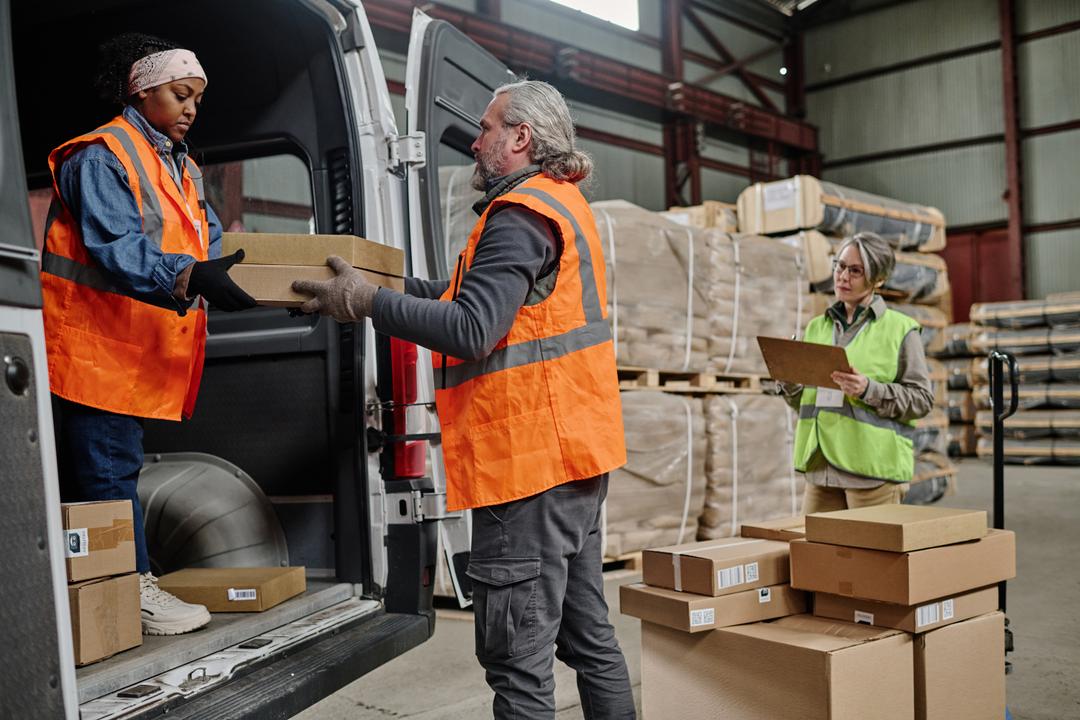
Support B2B and B2C commercial flows, mixed stores and warehouses, promotional pricing, loyalty rules, and the operational controls needed for daily trade execution.
Warehouse execution with mobile scanning
Use barcode scanning, product search, mobile warehouse forms, and reconciliation workflows to keep stock operations aligned with commercial documents.
Returns, storno, and local adjustments
Process returns from customers, returns to vendors, storno documents, invoice corrections, and trade adjustments without losing document traceability.
EU and export trade scenarios
Handle foreign addresses, currency-specific documents, taxation variants, and the local rules that matter in cross-border trade.
Reconciliation and operational reporting
Use settlement reports, acquiring checks, SAGA comparisons, and sales document validation to keep commercial and accounting data aligned.
Connected operations from front office to finance
The real advantage is not one feature at a time, but the fact that POS, stock, documents, payments, and finance all refer to the same operating reality.
Connected ecosystem
Keep your website, warehouse, and commercial back office on the same data
Trade Management can exchange the commercial data that online channels need most, while keeping orders, stock, prices, and customer records connected to the same operating system.

Website and B2B portal exchange
Send full or changed products, channel-specific prices, warehouse availability, and sales-order statuses to a website. Send customer records and sales orders back to Trade Management without re-entering them.
Controlled, secure synchronization
Configure more than one website, choose which data to export, set the sending interval, and secure callbacks with Basic authentication or a Bearer token.
PayDesk and POS
Synchronize receipts, price changes, returns, warehouse data, order payments, fiscal reports, and connected receipt-related data flows.
Contabilitate and OneConta
Exchange trade data with accounting systems, keep VAT and tax mappings aligned, and reconcile transferred documents across systems.
Wolt, Glovo, Bolt, and online orders
Process delivery service orders, SKU mapping, product synchronization, acceptance workflows, delivery updates, and webhook-based order exchange.
Banks, acquiring, and MT940
Load bank classifiers, process bank account operations, match acquiring payments, and support MT940-based statement workflows.
Courier and shipment flows
Support delivery and courier scenarios with operational links between shipments, warehouse activity, and trade documents.
HTTP services, JWT, and scheduled exchange
Use API services, authentication, exchange rules, scheduled jobs, and extension-based synchronization with external operational systems.
Rollout model
Help buyers see how the first Trade Management release can start
A stronger trade page explains which commercial process goes first, how warehouse and fiscal fit are handled early, and how the rollout expands without breaking operations.

Choose the highest-friction commercial flow first
Start from the process that creates the most operational pain: stores, warehouse, POS, e-commerce orders, returns, or Romanian fiscal compliance.
Define a first release around daily execution
Build the initial rollout around the documents, payments, stock movements, and teams that need to operate together from day one.
Connect fiscal and external exchanges early
Bring ANAF-related flows, PayDesk, accounting, bank exchange, or online-order integrations into the first release when they remove manual work immediately.
Stabilize operations, then expand into adjacent flows
Once daily trade execution is reliable, extend into new channels, additional reports, warehouse depth, or wider finance integration.
Common first-release priorities
- sales and POS workflows
- warehouse and stock control
- Romanian fiscal compliance
- accounting and payment reconciliation
Typical connected systems
- PayDesk and store POS
- OneConta or accounting databases
- banks, acquiring, and MT940 exchange
- marketplaces, delivery services, and API integrations
What buyers need to see on the page
- which teams benefit first
- how local compliance fits the rollout
- how stores, warehouse, and finance stay aligned
- what the next step is: demo, scope review, or rollout discussion
FAQ
Is Trade Management only for retail stores?
Fit
Does it support Romanian fiscal flows such as e-Factura and e-Transport?
Compliance
Can it integrate with POS, PayDesk, banks, marketplaces, and accounting?
Integrations
Which teams use the system on a daily basis?
Users
Can we implement it gradually instead of replacing everything at once?
Implementation
Is Trade Management only for retail stores?
No. It fits retail, distribution, e-commerce, delivery-driven commerce, and mixed operations that need stock, POS, fiscal documents, warehouse workflows, and commercial reporting in one system.
Start with the trade workflow that matters most
Use the page to move buyers from generic interest into a clearer next step: a demo, a rollout discussion, or a scope review around the most urgent commercial process.